
PERSISTENCE / RISK
By Juliet McNelly
Juliet McNelly
Lifestyle & Editorial Writer
Juliet McNelly is a freelance copywriter specialising in lifestyle, travel and brand-led editorial content, with a focus on engaging storytelling and audience connection.
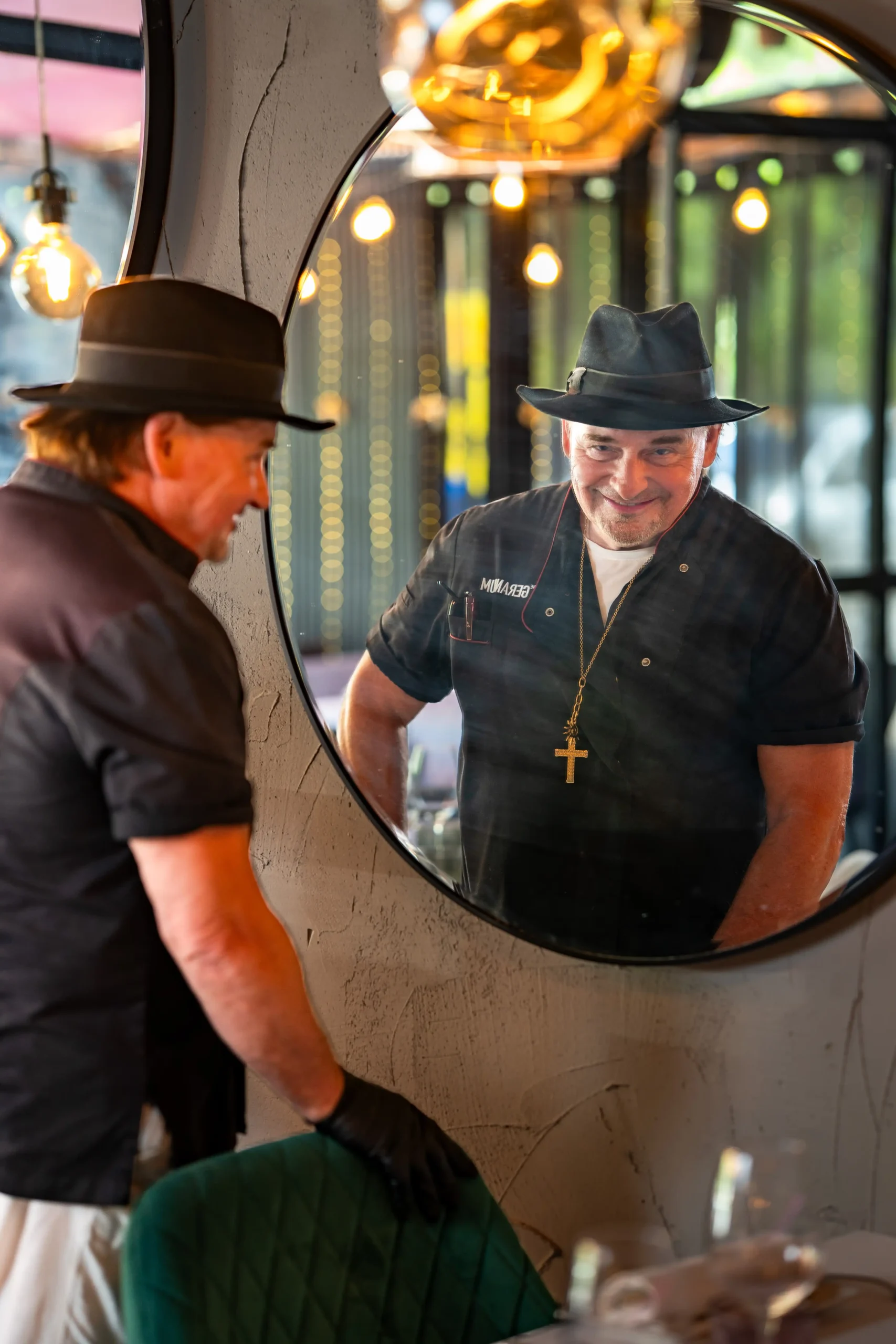
Steven Saunders’ career has been shaped by bold decisions, relentless persistence and a willingness to take risks before he felt fully ready. From Michelin-recognised restaurants and Formula One hospitality to television, radio and publishing, his journey is full of ambition and reinvention.
Yet behind the success lies an honest story about sacrifice, resilience, family and the true cost of building something extraordinary.
5-7 Min Read
Restaurant, Chef
Feature Story
“I didn’t plan on taking the risk; it just happened.”
Steven Saunders has my full attention. We’re chatting about the time he secured the money for his first restaurant, The Pink Geranium, and it’s certainly not what I expected.
With the help of Maggie Thatcher’s Young Entrepreneurs Scheme in the 1980s, he raised €400,000 – the equivalent of around €3 million today – with a dream of opening his own business.
The catch? An interest rate of 17.5%.
“In this hand here, I’ve got no restaurant and no money, and in this one I’ve got €425,000 being offered to me.”
In the end, Steven took the risk. It would be the first of many huge leaps towards earning a Michelin star. But was it easy?
“Absolutely not.”
Steven tells me that running restaurants is a hard game.
“It’s not romantic trying to pay the bills.”
That was exactly what Steven was doing at the beginning of his career, while £8,000 of interest left his account every month.
“Everybody loves the idea of having a restaurant. They don’t understand the reality of it.”
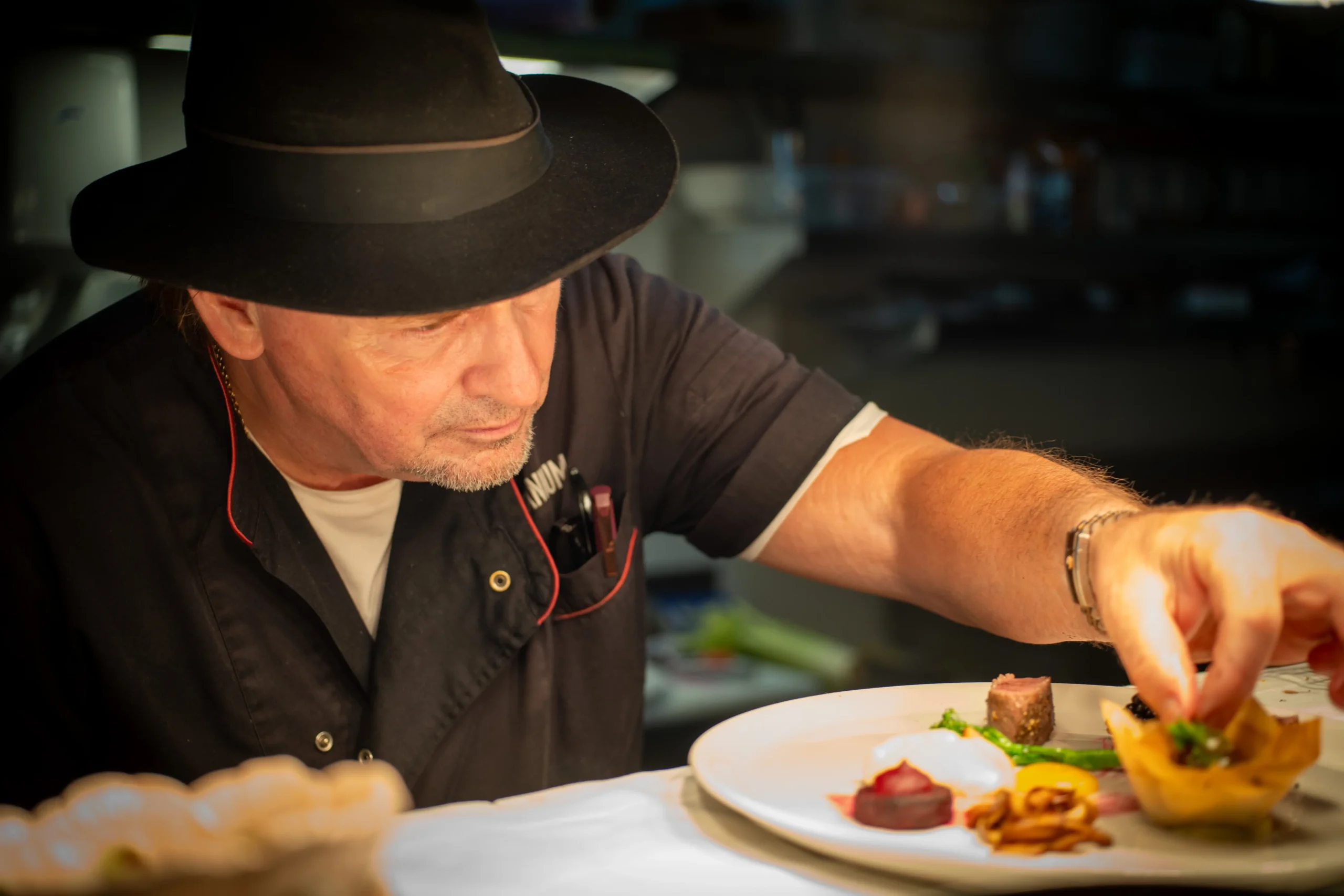
Yet Steven has run not one, but three award-winning restaurants, as well as a large-scale global hospitality project. That is only the tip of an iceberg that also includes radio, television, publishing and an organic cookery school.
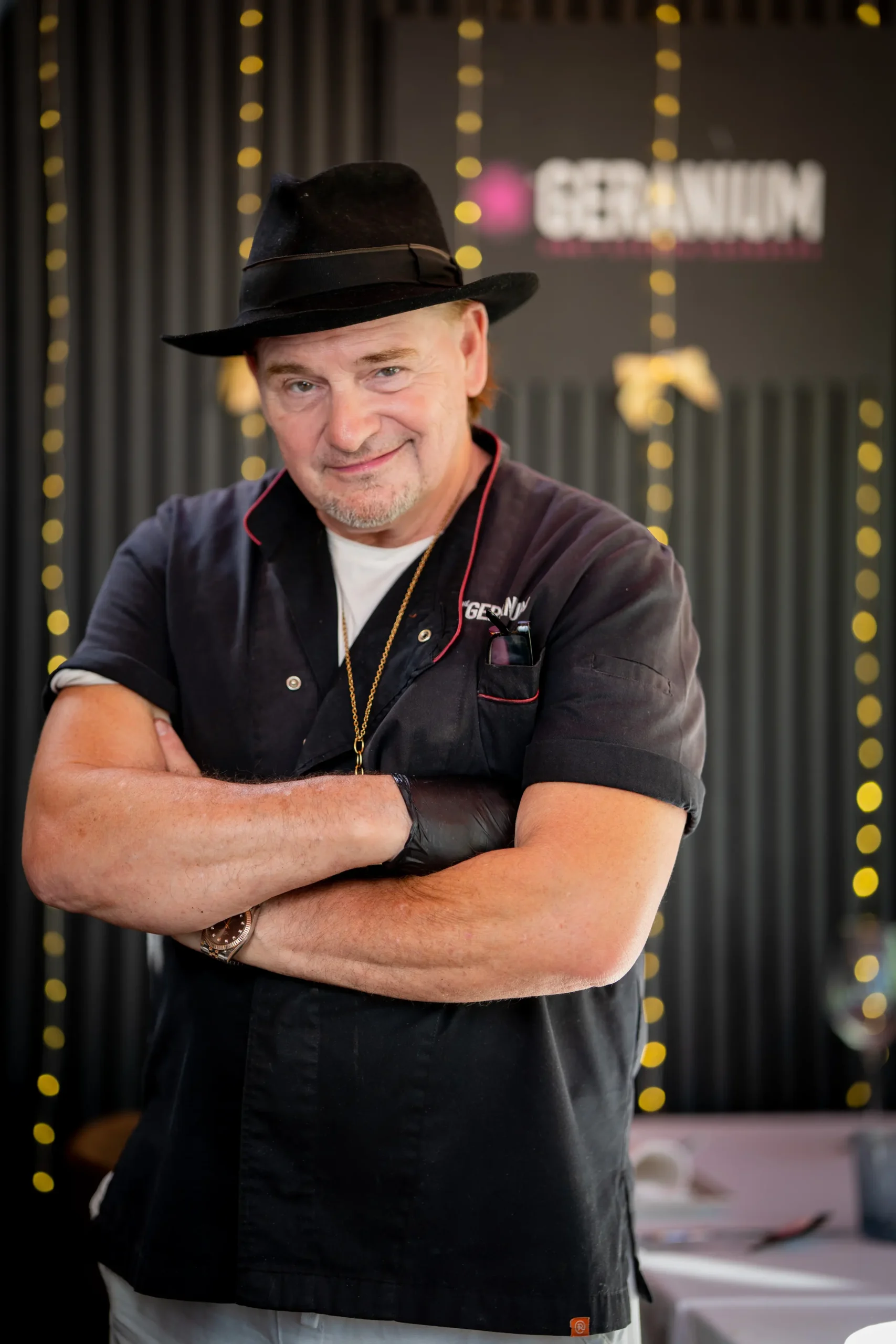
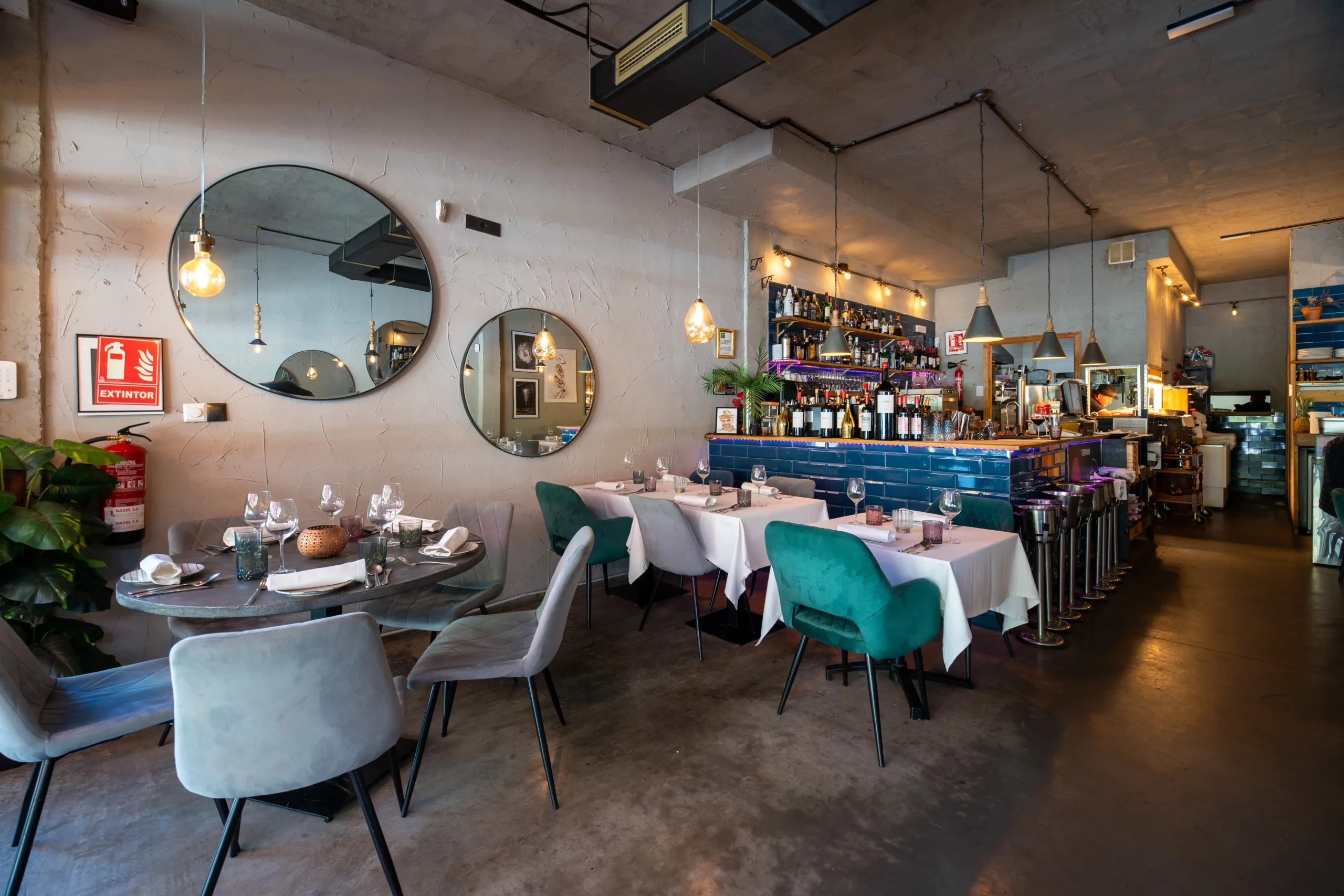
Today, he can be found at the New Geranium, a fine-dining experience only a five-minute walk from central La Cala and recently named as one of Spain’s top 25 restaurants.
While we chat, I see glimpses of the life Steven has built for himself. Three chihuahuas nap on the sofa, unbothered by the camera he waves towards them.
It’s a large finca, quite different from his first property in Marbella, Casa Joy, which he bought during his Formula One years so he could spend quality time with his parents.
Back at the finca, Steven points outside to his pride and joy: the garden where he grows organic fruit and vegetables, just as his grandfather did years ago.
However, it was Steven’s mother, Joy, who became his culinary muse.
For more than ten years, Steven watched and learned from his mother before beginning work at the Savoy Hotel in London.
His interview was a masterclass in how to stand out from the crowd. He prepared fresh bread and duck terrine to Michelin-star standards, securing the job and almost immediately receiving a taste of recognition through a feature in the East Anglian Times.
Then the gruelling work began.
Steven regularly worked six-day weeks, sometimes from seven in the morning until midnight.
When he trained, the visionary ideas of ambitious young chefs were not always encouraged in professional kitchens. Like many others, Steven experienced bullying, while some of his creative ideas were used without proper credit.
“But without the Savoy, I wouldn’t be where I am now. I had an understanding of food,” Steven reflects.
The experience gave him the technical mastery and reputation he needed to be headhunted for a patron chef position at only 19 years old.
Steven’s relentless drive also spilled into his attempts to break into radio and television.
Recognising that media exposure could help him become an acclaimed chef, he wrote scripts and ideas throughout the night and pitched them to television programmes.
Even when the calls didn’t come, Steven continued ringing until somebody replied.
“Eventually, I got an offer for a radio show in Cambridge.”
A chance encounter followed when the director of Good Morning Britain heard him on air and offered him a chef role on television.
“I was literally on every channel at one point,” he chuckles, “much to the amusement of my dad.”
It eventually led to Steven appearing on Ready Steady Cook, which was watched by an audience of 10 million, and publishing a series of cookery books, including the popular Chef’s Kiss.
“I had worked hard to get that recognition. I’d written and written. I’d sat through auditions and been turned away, and I kept going until I got where I wanted to be.”
I imagine that having a supportive father who genuinely believed he could succeed as a chef from a young age may have cultivated the “Why not?” approach that has driven Steven throughout his career.
Equally, that attitude has brought its fair share of ups and downs.
Steven bought into the kitsch charm of The Pink Geranium with little thought about how he would repay the money.
“Having nothing makes you take risks.”
The excitement of owning his own restaurant distracted him from the reality of saving for running costs, maintenance and upkeep.
One financial lesson Steven learned early in his career was the importance of having a good accountant to oversee the figures. In his view, finding the right accountant is “more important than finding a chef”.
Steven’s successful ten-year involvement in Formula One, as head of catering through his company Aspire, also began with several sizeable bluffs.
After presenting the head of Silverstone with a full-course tasting menu, Steven confidently pitched his business proposition.
“I said I had 400 staff.”
When the operation expanded to Abu Dhabi, that figure doubled to 1,000, much to the shock of his business partner.
“But,” Steven continues, “we had to sell it to them first.”
His move into large-scale hospitality projects, serving as many as 49,000 people per day in the Gulf, required an entirely new level of expertise.
“It wasn’t just Formula One. There was Ferrari World being built.”
Faced with the task of helping to deliver such a major operation, Steven ultimately brought in 400 chefs. Rather than relying solely on his existing UK contacts, he adapted and recruited through local networks.
“Where did I get them from? I rang people I knew and I rang hotels in Dubai and said, ‘I need staff.’”
At the New Geranium in Spain, it is clear that Steven continues to apply the same adaptable mindset, from partnering with local fresh-produce suppliers to training his team.
Steven’s all-or-nothing approach has taken him across the world, but it has also affected his family life. The reality of pursuing excellence often comes at a high price.
“I wish I’d spent more time with the kids rather than just focusing on work,” Steven reveals.
His parents also saw little of him during the earlier years, particularly when he was leading Formula One hospitality at the Yas Marina Circuit.
It must have been especially difficult to work in an industry where time off was so limited while his mother was living with Alzheimer’s disease.
“Hospitality was perfect for me, but it really takes over your life.”
Although some people imagine that being a chef is glamorous, Steven points out that most people working in restaurants are simply trying to survive.
He found little difference in the restaurateur experience after moving to Spain, apart from the weather. Higher taxes and social security costs, he says, can make life especially difficult for small business owners.
“Part of my plan was to retire here, and I’ve kind of not done that because the restaurants give me 100% work all the time.”
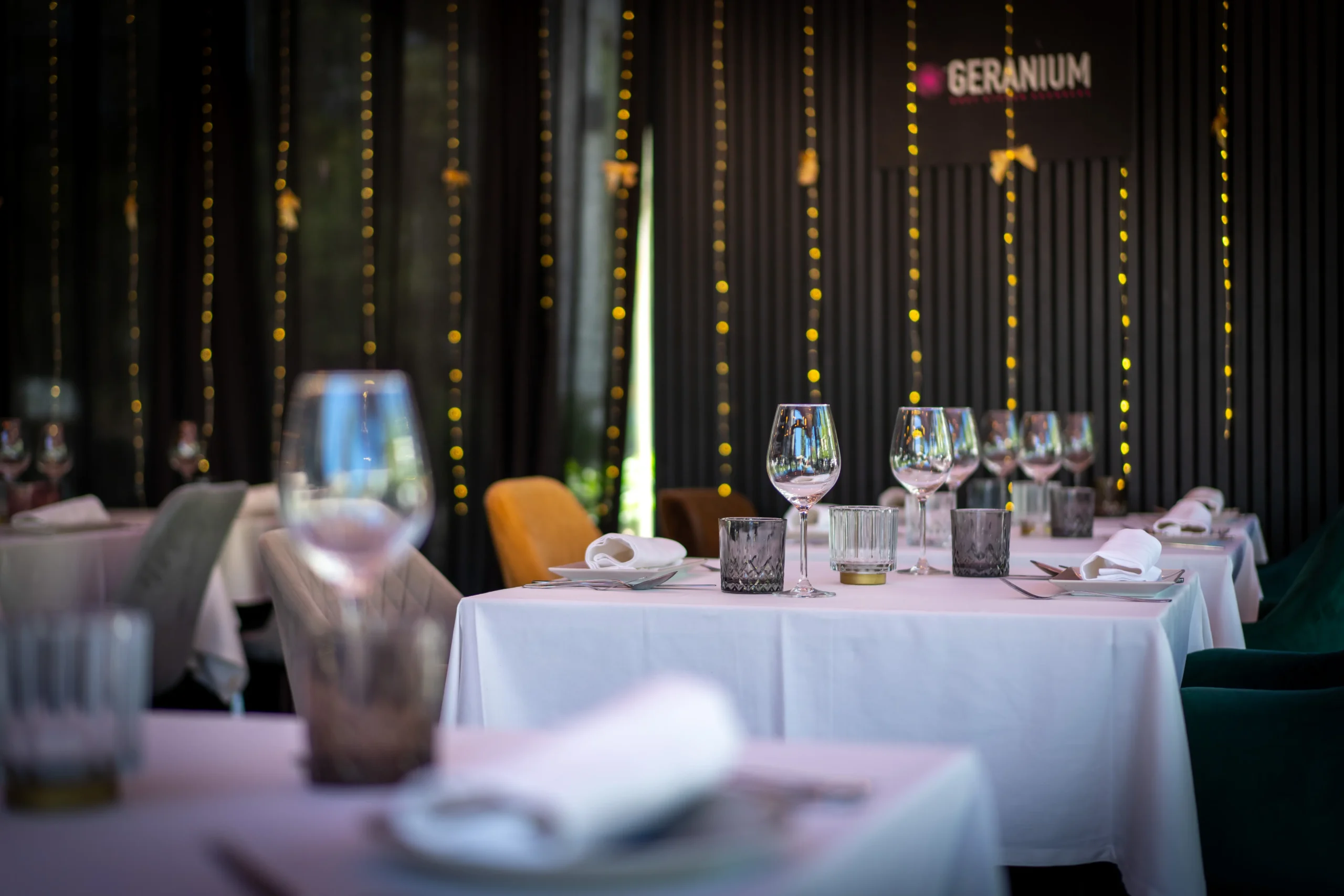
After 40 years working with the Geranium brand, appearing regularly in the media and receiving a Bib Gourmand – an achievement that left him speechless – Steven reflects honestly on his career.
He is adamant about the importance of two things: self-belief and confidence.
“I think I took some risks and some of them paid off. Not all; I’ve not had a 100% success rate.”
We agree that the only way to grow a business is to make mistakes along the way.
Success rarely comes from getting every decision right. It comes from continuing to adapt, learn and move forwards when some of those decisions inevitably go wrong.
So, what comes next for Steven?
“The most important thing for me is to spend time with my children and their kids. I’d never really thought about that before.”
Now a grandparent, Steven’s priorities have shifted towards his family, and it is obvious how fond he is of them.
What strikes me most about his career is the sheer consistency of his approach. He has never stopped learning, whether in the kitchens of the Savoy, appearing on television or running his many businesses.
The path has rarely been simple, but Steven has continued pressing forwards, guided by his undeniable passion for fresh, fine dining and the connections it creates.
As he approaches retirement, Steven’s growing desire to spend more time with the people he loves is perhaps a reminder to us all that building a business can become life-consuming.
Yet there are always moments when we can step back, take stock and appreciate just how wonderfully far we have come.